Stainless Steel Cookware: Benefits, Uses & Buying Guide
Stainless steel cookware is a popular choice for both household and professional kitchens. Its clean appearance, durability and versatile cooking performance make it suitable for a wide range of cooking applications.
Unlike coated cookware, stainless steel cookware generally provides an uncoated cooking surface. This makes it particularly useful for cooking techniques where browning and searing are important.
But not all stainless steel cookware is the same.
Construction, thickness, base design, handles and overall manufacturing quality can have a significant effect on the final product.
This guide explains what stainless steel cookware is, its benefits, common applications and what to consider before buying.
What Is Stainless Steel Cookware?
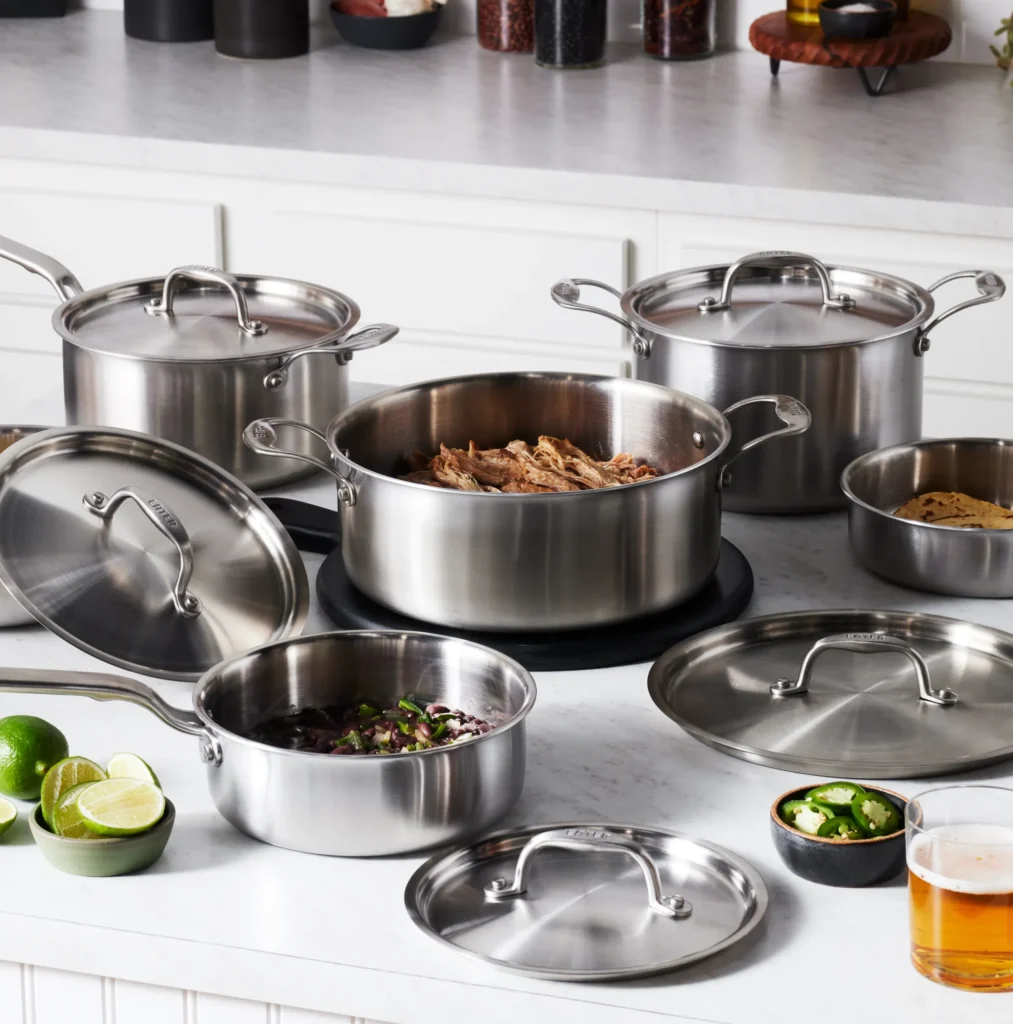
Stainless steel cookware is manufactured using stainless steel as a primary material.
It can be used to manufacture:
- Frying pans
- Sauce pans
- Cooking pots
- Stock pots
- Saucepans
- Cookware sets
Some cookware products may also combine stainless steel with other materials as part of their construction.
Benefits of Stainless Steel Cookware
Durable Construction
Stainless steel is widely valued for its durability.
When properly designed and manufactured, stainless steel cookware can be suitable for frequent cooking and long-term use.
Versatile Cooking
Stainless steel cookware can be used for many different cooking techniques.
These include:
- Sautéing
- Frying
- Browning
- Searing
- Simmering
- Boiling
- Sauce preparation
Uncoated Cooking Surface
One of the defining characteristics of stainless steel cookware is its generally uncoated cooking surface.
This makes it attractive to cooks who prefer traditional cookware surfaces.
Professional Appearance
Stainless steel has a clean, modern appearance that works well in both home and professional kitchens.
Its appearance can also complement modern cookware collections.
Understanding Stainless Steel Cookware Construction
When choosing stainless steel cookware, consider the complete construction.
Thickness
Thickness can influence weight, heat response and overall durability.
The appropriate thickness depends on the product design and intended application.
Base Construction
The base is particularly important because it affects how cookware interacts with the heat source.
Different designs can be developed depending on the intended cooking environment.
Handles
A secure and comfortable handle contributes to usability.
For larger cookware pieces, proper handle design is especially important because of the additional weight.
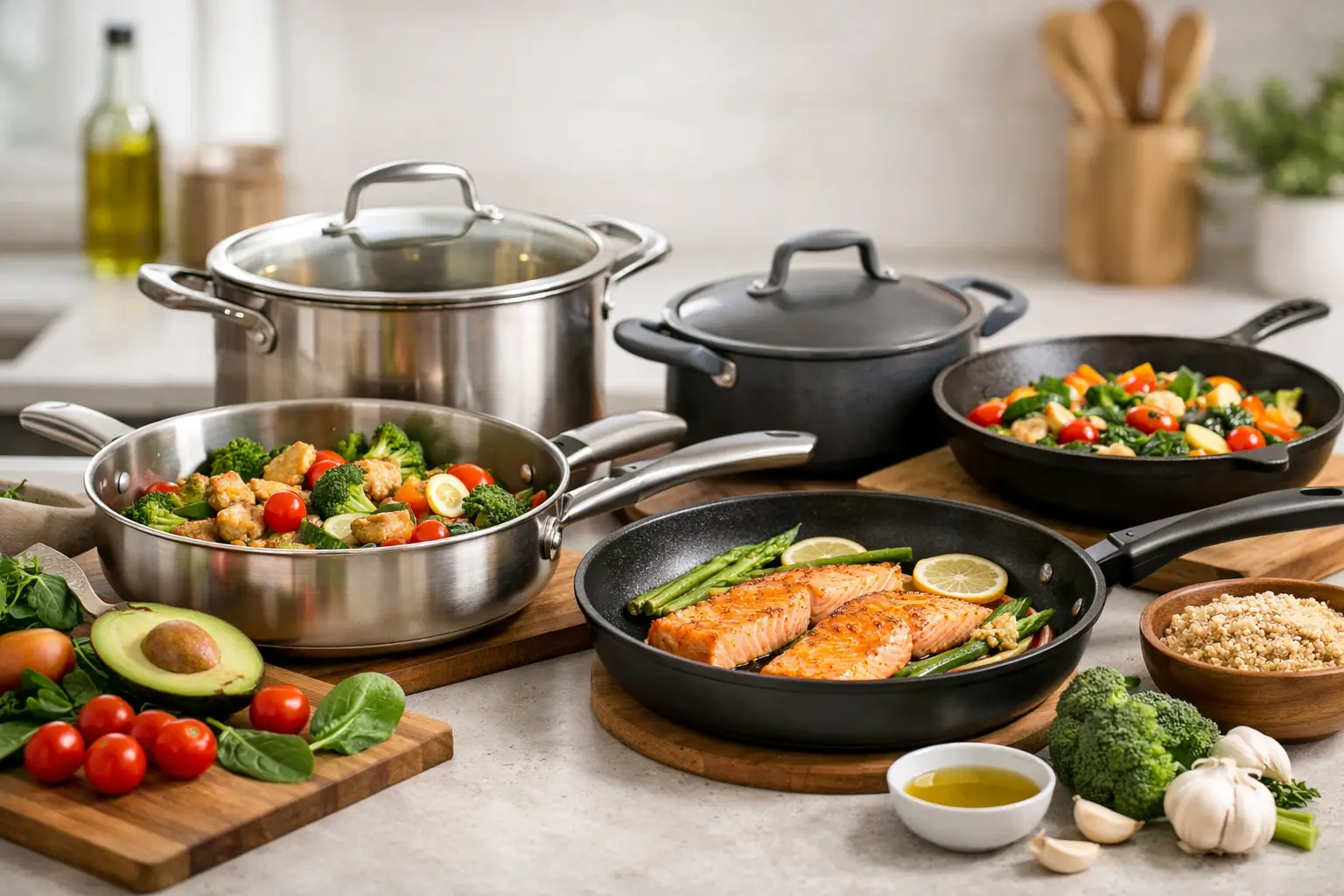
Stainless Steel vs Non-Stick Cookware
Both cookware types have different advantages.
Stainless steel:
- Uncoated cooking surface
- Durable construction
- Versatile cooking applications
- Useful for browning and searing
Non-stick:
- Easy food release
- Convenient everyday cooking
- Useful for delicate foods
- Easy cleanup
The better choice depends on your cooking requirements.
Many kitchens use both types because different cookware surfaces are suitable for different tasks.
How to Cook With Stainless Steel Cookware
Stainless steel cookware can require a different cooking technique from non-stick cookware.
Preheating the pan appropriately and using suitable heat levels can help reduce sticking.
When cooking foods that are more likely to stick, temperature control and proper cooking technique become particularly important.
Always follow the cookware manufacturer’s recommendations.
How to Choose Stainless Steel Cookware
Before purchasing, consider:
Intended Use
Think about whether you’re primarily frying, sautéing, boiling, simmering or preparing sauces.
Size
Choose sizes appropriate for the quantity of food you normally prepare.
Construction
Look at thickness, base construction and handle attachment.
Compatibility
Check whether the cookware is suitable for your cooking surface, including induction where applicable.
Maintenance
Consider how the cookware should be cleaned and maintained.
Stainless Steel Cookware Sets
A stainless steel cookware set can provide a coordinated collection of cooking pieces.
Depending on the design, a set may include:
- Frying pans
- Sauce pans
- Cooking pots
- Lids
- Additional components
The ideal configuration depends on the target customer and intended application.
Stainless Steel Cookware for Businesses
Retailers, distributors and cookware brands often have different requirements from individual consumers.
When sourcing stainless steel cookware, businesses should consider:
- Material specifications
- Product dimensions
- Construction
- Product consistency
- Handle design
- Finish
- Branding
- Packaging
- Order requirements
A reliable manufacturing partner can help businesses develop products that meet their specific market requirements.
Custom Stainless Steel Cookware
Custom cookware allows businesses to develop products around their own specifications.
Depending on the project, customization may include:
- Product dimensions
- Construction
- Handle designs
- Finishes
- Branding
- Packaging
- Product combinations
This can be particularly useful for private-label cookware brands.
Frequently Asked Questions
Is stainless steel cookware durable?
Stainless steel cookware is generally valued for durability, although actual performance depends on the material, construction, manufacturing quality and usage.
Is stainless steel cookware good for frying?
Yes. Stainless steel frying pans can be used for frying, sautéing, browning and searing when appropriate cooking techniques are used.
Does stainless steel cookware have a coating?
Traditional stainless steel cookware generally has an uncoated cooking surface. However, always check the specific product specifications.
Is stainless steel cookware suitable for professional kitchens?
Stainless steel cookware is widely used in professional cooking environments because of its versatility and durable construction.
Can stainless steel cookware be made for a private-label brand?
Yes. Custom and OEM stainless steel cookware projects can be developed around agreed product specifications, branding and packaging.
Final Thoughts
Stainless steel cookware remains a versatile choice for kitchens that value durability, an uncoated cooking surface and broad cooking applications.
When choosing stainless steel cookware, consider more than the appearance. Material, construction, thickness, base design, handles, size and cooktop compatibility all matter.
For businesses, manufacturing consistency and customization can be equally important.
Explore ShineCookware’s Stainless Steel Cookware →
| Non-Stick Cookware | Stainless Steel Cookware |
|---|---|
| Advantages | Advantages |
|
|
| Disadvantages | Disadvantages |
|
|
How to Choose Between Non-Stick and Stainless Steel Cookware
Ask yourself the following questions before making a decision:
1. What foods do you cook most often?
If you regularly prepare delicate foods, non-stick cookware may be more convenient.
2. How important is easy cleanup?
If quick and easy cleanup is a priority, non-stick cookware can be attractive.
3. Do you prioritize long-term durability?
If durability and an uncoated cooking surface are major priorities, stainless steel may be the better choice.
4. What cooking techniques do you use?
Think about whether you mainly fry, sauté, brown, simmer, boil, or prepare delicate foods.
5. How much cookware do you need?
Instead of choosing one material exclusively, consider combining different cookware types according to your cooking needs.
What Should Businesses Consider When Buying Cookware?
For businesses, the decision between non-stick and stainless steel cookware involves more than individual cooking preferences.
Retailers, restaurants, hospitality businesses, distributors, and cookware brands should consider:
-
Product quality
-
Material specifications
-
Coating requirements
-
Product sizes
-
Handle designs
-
Manufacturing consistency
-
Packaging
-
Branding
-
Production capacity
-
Quality control
-
Order quantities
-
Customization options
Businesses developing their own cookware range may also benefit from working directly with a manufacturer that can provide custom or OEM production.
Non-Stick and Stainless Steel Cookware from ShineCookware
At ShineCookware, we understand that different kitchens and businesses have different cookware requirements.
Our cookware range includes both non-stick and stainless steel products, alongside frying pans, sauce pans, cookware sets, kitchen utensils, and pressure cookers.
For businesses looking for customized products, ShineCookware also offers custom and OEM cookware solutions designed around specific product and branding requirements.
Whether you are sourcing cookware for retail, hospitality, foodservice, distribution, or your own cookware brand, choosing the right material is an important part of developing a reliable product range.
Frequently Asked Questions
Is non-stick better than stainless steel?
Neither is universally better. Non-stick cookware is convenient for easy food release and cleanup, while stainless steel cookware is valued for durability, versatility, and an uncoated cooking surface.
Which lasts longer, non-stick or stainless steel?
Stainless steel cookware can generally provide long-term durability because it does not rely on a coating that can wear down. The lifespan of either type also depends on construction, quality, usage, and maintenance.
Is stainless steel harder to cook with?
It can require more attention to temperature, preheating, and cooking oil than non-stick cookware. With the right technique, stainless steel can be highly versatile.
Is non-stick cookware good for everyday use?
Non-stick cookware can be very convenient for everyday cooking, particularly for foods that tend to stick. Users should follow the manufacturer’s care and temperature recommendations.
Should I buy both non-stick and stainless steel cookware?
For many kitchens, having both can be useful. The two materials offer different cooking characteristics and can complement each other.
What is better for a cookware business: non-stick or stainless steel?
It depends on the target market and product strategy. Offering both can allow a cookware business to serve customers with different preferences. Businesses should also consider product specifications, manufacturing capabilities, quality requirements, packaging, and customization.
Final Thoughts
The choice between non-stick and stainless steel cookware ultimately comes down to your cooking requirements.
Non-stick cookware offers convenience, easy food release, and simple cleanup, making it a popular choice for everyday cooking. Stainless steel cookware offers durability, versatility, and an uncoated cooking surface, making it suitable for a wide range of cooking applications.
For many kitchens, the best solution is not choosing one over the other but using both for different purposes.
For cookware retailers, distributors, hospitality businesses, and brands, the decision should also include product quality, manufacturing consistency, customization, packaging, and long-term supply capabilities.
Looking for non-stick, stainless steel, or custom cookware for your business? Explore ShineCookware’s cookware range or contact us to discuss your requirements. Also Look us out at Sialkot Made.