Non-Stick vs Stainless Steel Cookware: Which Is Better?
Choosing between non-stick and stainless steel cookware is one of the most common decisions when building a cookware collection. Both options have their advantages, but they offer very different cooking experiences.
Non-stick cookware is known for easy food release, convenient cooking, and simple cleanup. Stainless steel cookware is valued for durability, versatility, and its uncoated cooking surface. The better option depends on how you cook, what foods you prepare, and what you expect from your cookware.
For homeowners, restaurants, retailers, hospitality businesses, and cookware buyers, understanding the differences between non-stick and stainless steel cookware can make it easier to select the right products.
In this guide, we compare non-stick and stainless steel cookware, including their cooking performance, durability, maintenance, versatility, and suitability for different applications.
What Is Non-Stick Cookware?
Non-stick cookware features a specially designed cooking surface that helps prevent food from sticking during cooking.
This makes non-stick frying pans, sauce pans, and other cookware particularly popular for foods such as:
- Eggs
- Pancakes
- Vegetables
- Fish
- Delicate foods
- Low-fat cooking
One of the biggest advantages of non-stick cookware is easy food release. It can also require less cooking oil for many applications, although the appropriate amount of oil depends on the recipe and cooking method.
Non-stick cookware is often chosen by people who want convenient everyday cooking and easier cleanup.
What Is Stainless Steel Cookware?
Stainless steel cookware uses stainless steel as the primary cooking material and generally has an uncoated cooking surface.
Stainless steel is widely used in cookware because it offers durability, a professional appearance, and versatility across many cooking applications.
Stainless steel cookware can be used for:
- Frying
- Sautéing
- Browning
- Boiling
- Simmering
- Preparing sauces
- General kitchen cooking
Unlike non-stick cookware, stainless steel does not rely on a non-stick coating for food release. Cooking technique, temperature control, and the appropriate use of cooking oil are therefore more important.
Non-Stick vs Stainless Steel: Key Differences
The main differences between non-stick and stainless steel cookware relate to food release, durability, cooking technique, maintenance, and versatility.
| Feature | Non-Stick Cookware | Stainless Steel Cookware |
|---|---|---|
| Food release | Generally very easy | Requires appropriate cooking technique |
| Cleaning | Usually easy | May require more cleaning |
| Cooking surface | Coated | Generally uncoated |
| Durability | Depends on coating and construction | Generally highly durable |
| Cooking oil | Often requires less | May require more depending on food |
| High-heat cooking | Follow manufacturer recommendations | Generally versatile |
| Maintenance | Requires care to protect coating | Generally straightforward |
| Appearance | Available in many finishes | Classic metallic appearance |
Before making a decision to choose; you should go through these considerations:
Which Is Easier to Clean?
For many everyday cooking tasks, non-stick cookware is easier to clean because food generally releases more easily from the surface.
Stainless steel cookware can also be cleaned effectively, but stuck-on food may require additional soaking, scrubbing, or appropriate cleaning methods.
The ease of cleaning ultimately depends on the food being cooked, cooking technique, and the cookware’s construction.
Which Is More Durable?
Stainless steel cookware generally has an advantage when long-term durability is a major priority.
Because stainless steel cookware does not rely on a non-stick coating for its cooking surface, there is no coating to wear down in the same way.
However, durability is influenced by more than material alone.
The thickness, construction, handle attachment, base design, manufacturing quality, and care of the cookware can all affect its useful life.
High-quality non-stick cookware can also provide excellent performance when used and maintained according to the manufacturer’s recommendations.
Which Is Better for High-Heat Cooking?
The appropriate cooking temperature depends on the cookware design and manufacturer specifications.
Stainless steel cookware is often valued for its versatility in a wide range of cooking applications. However, users should still follow the manufacturer’s instructions and use appropriate cooking temperatures.
For non-stick cookware, temperature management is particularly important because excessive heat can affect the cooking surface.
Always check the manufacturer’s recommendations before using cookware at high temperatures or in an oven.
Which Is Better for Everyday Cooking?
For everyday convenience, many people prefer non-stick cookware because of its easy food release and simple cleanup.
A non-stick frying pan can be particularly useful for breakfast foods, delicate ingredients, and quick meals.
Stainless steel cookware can be a better fit for cooks who want a versatile, durable cookware collection and are comfortable using appropriate cooking techniques.
There is no need to choose only one.
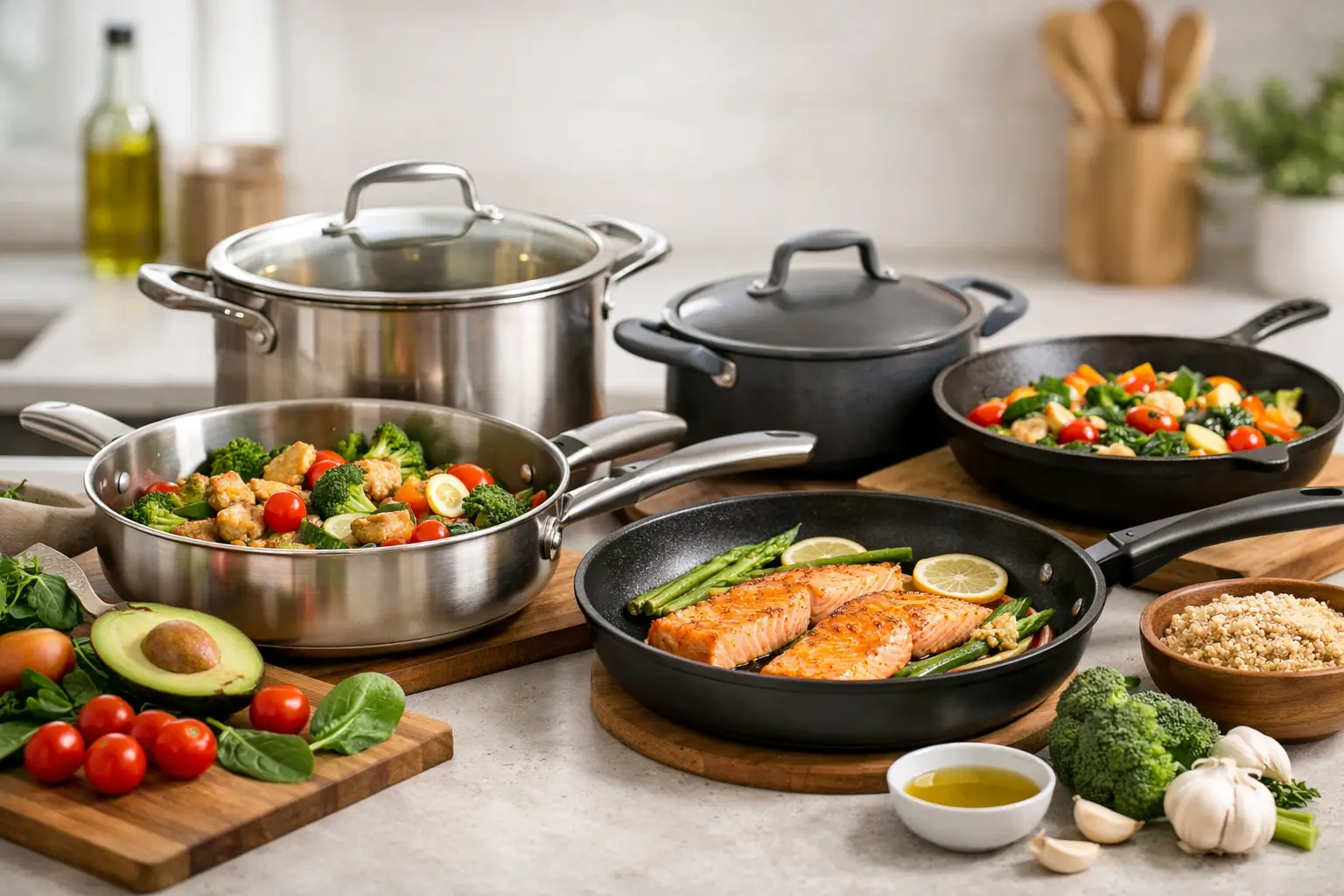
Many kitchens benefit from having both non-stick and stainless steel cookware available for different cooking tasks.
Non-Stick vs Stainless Steel for Different Cooking Needs
For Eggs and Delicate Foods
Non-stick cookware is often a convenient option because food can release easily from the cooking surface.
For Browning and Sautéing
Stainless steel cookware can be a strong choice when cooking techniques that involve browning are important.
For Everyday Family Meals
Both options can work well. The best choice depends on cooking habits, preferred maintenance, and the types of food prepared.
For Commercial Kitchens
Commercial buyers should consider durability, frequency of use, cleaning requirements, cooking applications, and overall product construction.
For Retailers
Retailers may benefit from offering both non-stick and stainless steel cookware to serve customers with different preferences.
Can You Use Both Non-Stick and Stainless Steel Cookware?
Absolutely.
A balanced cookware collection can include both types because they serve different purposes.
For example, a kitchen might use:
- A non-stick frying pan for eggs and delicate foods
- A stainless steel frying pan for browning and sautéing
- A stainless steel saucepan for sauces and boiling
- A non-stick saucepan for convenient everyday cooking
- A cookware set combining different pieces for broader kitchen use
Having multiple cookware types gives cooks greater flexibility.
| Non-Stick Cookware | Stainless Steel Cookware |
|---|---|
| Advantages | Advantages |
|
|
| Disadvantages | Disadvantages |
|
|
How to Choose Between Non-Stick and Stainless Steel Cookware
Ask yourself the following questions before making a decision:
1. What foods do you cook most often?
If you regularly prepare delicate foods, non-stick cookware may be more convenient.
2. How important is easy cleanup?
If quick and easy cleanup is a priority, non-stick cookware can be attractive.
3. Do you prioritize long-term durability?
If durability and an uncoated cooking surface are major priorities, stainless steel may be the better choice.
4. What cooking techniques do you use?
Think about whether you mainly fry, sauté, brown, simmer, boil, or prepare delicate foods.
5. How much cookware do you need?
Instead of choosing one material exclusively, consider combining different cookware types according to your cooking needs.
What Should Businesses Consider When Buying Cookware?
For businesses, the decision between non-stick and stainless steel cookware involves more than individual cooking preferences.
Retailers, restaurants, hospitality businesses, distributors, and cookware brands should consider:
-
Product quality
-
Material specifications
-
Coating requirements
-
Product sizes
-
Handle designs
-
Manufacturing consistency
-
Packaging
-
Branding
-
Production capacity
-
Quality control
-
Order quantities
-
Customization options
Businesses developing their own cookware range may also benefit from working directly with a manufacturer that can provide custom or OEM production.
Non-Stick and Stainless Steel Cookware from ShineCookware
At ShineCookware, we understand that different kitchens and businesses have different cookware requirements.
Our cookware range includes both non-stick and stainless steel products, alongside frying pans, sauce pans, cookware sets, kitchen utensils, and pressure cookers.
For businesses looking for customized products, ShineCookware also offers custom and OEM cookware solutions designed around specific product and branding requirements.
Whether you are sourcing cookware for retail, hospitality, foodservice, distribution, or your own cookware brand, choosing the right material is an important part of developing a reliable product range.
Frequently Asked Questions
Is non-stick better than stainless steel?
Neither is universally better. Non-stick cookware is convenient for easy food release and cleanup, while stainless steel cookware is valued for durability, versatility, and an uncoated cooking surface.
Which lasts longer, non-stick or stainless steel?
Stainless steel cookware can generally provide long-term durability because it does not rely on a coating that can wear down. The lifespan of either type also depends on construction, quality, usage, and maintenance.
Is stainless steel harder to cook with?
It can require more attention to temperature, preheating, and cooking oil than non-stick cookware. With the right technique, stainless steel can be highly versatile.
Is non-stick cookware good for everyday use?
Non-stick cookware can be very convenient for everyday cooking, particularly for foods that tend to stick. Users should follow the manufacturer’s care and temperature recommendations.
Should I buy both non-stick and stainless steel cookware?
For many kitchens, having both can be useful. The two materials offer different cooking characteristics and can complement each other.
What is better for a cookware business: non-stick or stainless steel?
It depends on the target market and product strategy. Offering both can allow a cookware business to serve customers with different preferences. Businesses should also consider product specifications, manufacturing capabilities, quality requirements, packaging, and customization.
Final Thoughts
The choice between non-stick and stainless steel cookware ultimately comes down to your cooking requirements.
Non-stick cookware offers convenience, easy food release, and simple cleanup, making it a popular choice for everyday cooking. Stainless steel cookware offers durability, versatility, and an uncoated cooking surface, making it suitable for a wide range of cooking applications.
For many kitchens, the best solution is not choosing one over the other but using both for different purposes.
For cookware retailers, distributors, hospitality businesses, and brands, the decision should also include product quality, manufacturing consistency, customization, packaging, and long-term supply capabilities.
Looking for non-stick, stainless steel, or custom cookware for your business? Explore ShineCookware’s cookware range or contact us to discuss your requirements.

