
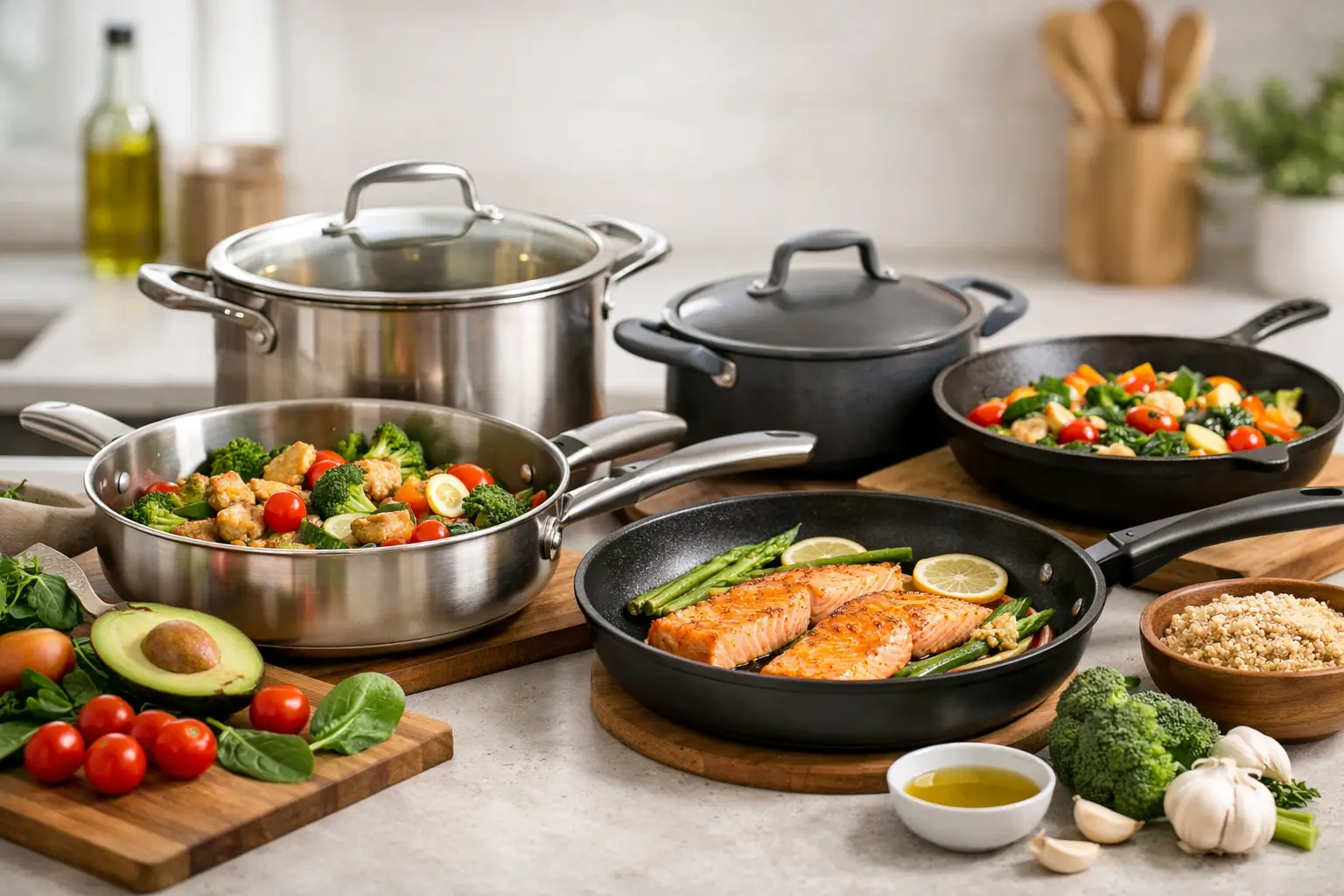
Kitchen Utensils: Essential Tools for Every Modern Kitchen
Cookware gets much of the attention in a kitchen, but the right kitchen utensils are just as important.
A good frying pan or saucepan can provide excellent cooking performance, but you still need the right tools to stir, turn, serve, mix and handle food.
Kitchen utensils come in many different forms and materials, including stainless steel, silicone, wood and other materials designed for specific cooking applications.
The best utensil collection isn’t necessarily the largest one. It should contain the tools you actually use and should complement your cookware.
In this guide, we’ll look at essential kitchen utensils, their common uses, materials and what to consider when choosing them.
What Are Kitchen Utensils?
Kitchen utensils are handheld tools used for food preparation, cooking, serving and handling ingredients.
Common examples include:
- Cooking spoons
- Spatulas
- Ladles
- Tongs
- Whisks
- Slotted spoons
- Serving utensils
- Turners
- Measuring tools
- Kitchen tools for specific preparation tasks
Different utensils are designed for different jobs.
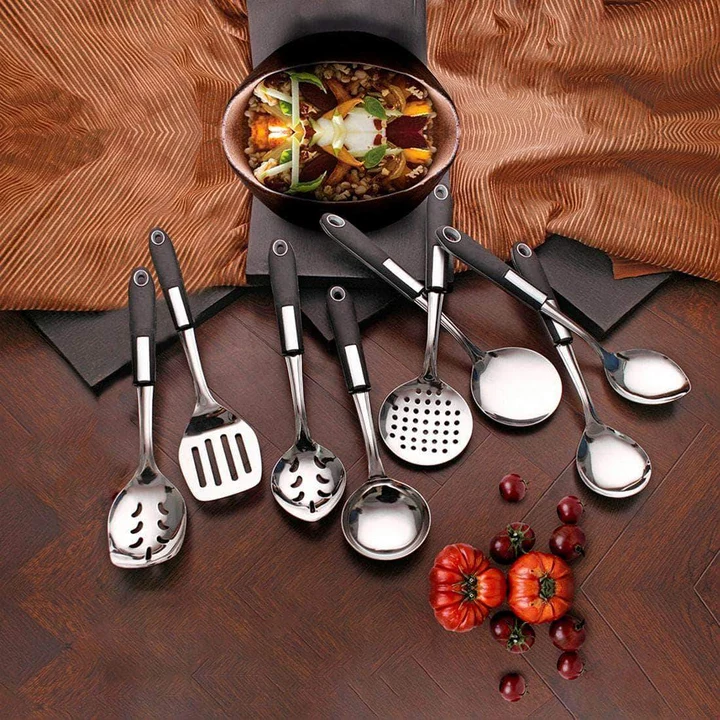
Why Quality Kitchen Utensils Matter
The right utensil can make cooking easier and more efficient.
A well-designed cooking utensil should ideally provide:
- Comfortable handling
- Appropriate strength
- Good control
- Easy cleaning
- Suitable material
- Appropriate heat resistance
- Compatibility with the cookware being used
Utensils should be selected according to the cookware surface and intended application.
Essential Kitchen Utensils
Cooking Spoon
A cooking spoon is one of the most versatile kitchen tools.
It can be used for:
- Stirring sauces
- Mixing ingredients
- Cooking vegetables
- Stirring soups
- Serving certain foods
Spatula
A spatula or turner is useful for lifting and turning food.
It is commonly used for:
- Eggs
- Pancakes
- Burgers
- Vegetables
- Fish
- Fried foods
For non-stick cookware, choose a utensil specifically recommended for use with the cooking surface.
Ladle
A ladle is designed for serving liquid or semi-liquid foods.
It is particularly useful for:
- Soups
- Sauces
- Stews
- Gravies
Tongs
Tongs provide a secure way to pick up and turn food.
They can be useful for:
- Meat
- Vegetables
- Pasta
- Salad
- Grilled foods
Whisk
A whisk is useful for mixing and incorporating ingredients.
Common applications include:
- Eggs
- Sauces
- Cream
- Batters
- Dressings
Choosing the Right Utensil Material
The material of a kitchen utensil can influence durability, heat resistance, cleaning and cookware compatibility.
Stainless Steel
Stainless steel utensils are popular because of their durability and clean appearance.
They can be particularly useful for cooking tasks that require a strong utensil.
However, metal utensils may not be suitable for every non-stick cooking surface.
Silicone
Silicone utensils can provide flexibility and are commonly used with coated cookware.
They can be useful for scraping, stirring and handling delicate cooking surfaces.
Always check the manufacturer’s heat-resistance specifications.
Wood
Wooden utensils have been used in kitchens for generations.
They can be useful for stirring and are often appreciated for their traditional appearance.
They should be properly cleaned and maintained according to the manufacturer’s instructions.
Kitchen Utensils for Non-Stick Cookware
Choosing compatible utensils is particularly important when using non-stick cookware.
Metal utensils can potentially damage certain non-stick surfaces.
For coated cookware, utensils made from suitable silicone, wood or other manufacturer-approved materials may be preferable.
Always follow the cookware manufacturer’s instructions.
Kitchen Utensil Sets
Buying a utensil set can be a convenient way to create a coordinated kitchen collection.
A set may include:
- Spoon
- Slotted spoon
- Spatula
- Ladle
- Tongs
- Whisk
- Turner
- Other cooking tools
The ideal combination depends on the target user.
A household may require a basic collection, while a professional kitchen may need a much broader range.
How to Choose Kitchen Utensils
Before buying utensils, consider several factors.
Intended Use
Choose tools based on the foods and cooking methods you use most often.
Material
Select materials suitable for the intended application.
Handle Design
A comfortable handle can make repeated cooking tasks easier.
Heat Resistance
Check the manufacturer’s specifications for temperature limits.
Cleaning
Consider whether the utensils are easy to clean and maintain.
Cookware Compatibility
Make sure the utensil material is appropriate for the cookware surface.
Kitchen Utensils for Professional Kitchens
Professional kitchens often require utensils that can withstand frequent use.
Durability, handling, cleaning and storage become particularly important.
A professional utensil collection may include larger numbers of:
- Tongs
- Ladles
- Spatulas
- Whisks
- Cooking spoons
- Serving tools
The exact selection depends on the kitchen and menu.
Kitchen Utensils for Retailers and Brands
For cookware and kitchenware businesses, utensils can complement an existing cookware collection.
A brand might develop coordinated:
- Cookware sets
- Frying pans
- Sauce pans
- Kitchen utensil sets
- Serving tools
This creates opportunities for bundled products and complete kitchen collections.
Custom Kitchen Utensils
Businesses can also explore custom and OEM kitchen utensils.
Depending on the product and manufacturer, customization may include:
- Material
- Dimensions
- Handle design
- Finish
- Logo
- Packaging
- Product combinations
Custom utensil sets can be developed to match a cookware brand’s overall product identity.
How to Build a Basic Kitchen Utensil Collection
If you’re starting from scratch, begin with the most frequently used tools.
A practical collection might include:
- Cooking spoon
- Spatula or turner
- Slotted spoon
- Ladle
- Tongs
- Whisk
You can then add specialized utensils based on your cooking habits.
This approach avoids filling your kitchen with tools you rarely use.
How to Store Kitchen Utensils
Good storage helps keep utensils organized and accessible.
Common options include:
- Utensil drawers
- Countertop containers
- Wall-mounted racks
- Hanging systems
- Kitchen organizers
Choose a storage method that keeps frequently used utensils within easy reach while maintaining a clean workspace.
Kitchen Utensils and Cookware Collections
Utensils work best when considered alongside cookware.
For example:
Non-stick frying pan + silicone turner
Stainless steel saucepan + stainless steel spoon
Large cooking pot + ladle
Thinking about cookware and utensils as a complete system can make it easier to choose appropriate tools.
Choosing Kitchen Utensils for Your Business
Businesses sourcing kitchen utensils should consider:
- Material specifications
- Dimensions
- Handle design
- Product durability
- Finish
- Packaging
- Branding
- Product consistency
- Order quantities
For retailers, presentation and packaging may be especially important.
For hospitality businesses, durability and ease of cleaning may take priority.
Frequently Asked Questions
What are the most essential kitchen utensils?
Common essentials include a cooking spoon, spatula, ladle, tongs, whisk and slotted spoon.
Which utensils are best for non-stick cookware?
Utensils made from materials approved for the specific non-stick surface are generally the safest choice. Silicone and wood are commonly used, while metal utensils may damage some coated surfaces.
Are stainless steel kitchen utensils durable?
Stainless steel is widely valued for strength and durability and is commonly used for cooking and serving utensils.
Are wooden utensils good for cooking?
Wooden utensils can be useful for stirring and mixing and are commonly used in kitchens. Proper cleaning and maintenance are important.
Can kitchen utensils be customized?
Yes. Custom and OEM kitchen utensils can be developed around product specifications, branding and packaging requirements.
Can I order custom utensil sets for my cookware brand?
Yes. Custom utensil sets can be developed as complementary products for cookware collections, depending on the manufacturer’s capabilities.
Final Thoughts
The right kitchen utensils can make everyday cooking more efficient, comfortable and enjoyable.
Instead of choosing utensils based only on appearance or the number of pieces in a set, consider the material, intended use, handle design, heat resistance, cleaning requirements and compatibility with your cookware.
For cookware brands and kitchenware businesses, utensils can also provide an opportunity to expand a product collection and create coordinated kitchen solutions.
Explore ShineCookware’s Kitchen Utensils or contact us about custom and OEM kitchenware solutions.